Agricultural landscapes are undergoing a profound transformation as farmers embrace diversified cropping systems to improve soil fertility, reduce pest pressures, and boost overall farm resilience. By integrating multiple species, varieties, and planting schedules, producers can harness the power of nature while maintaining profitability. This article outlines practical strategies for implementing crop diversification and explores its impact on farm vitality.
Benefits of Crop Diversification
Incorporating a wide range of crops into a rotation or intercropping scheme delivers multiple ecosystem services. First, it enhances soil health by cycling nutrients and breaking pest cycles. Diverse root structures stimulate microbial communities, which in turn improve water infiltration and organic matter content. Second, mixed plantings support on-farm biodiversity, attracting beneficial insects and pollinators that contribute to natural pest control.
Beyond ecological gains, diversified systems often exhibit greater yield stability under erratic weather patterns. Insurance against crop failure emerges naturally when one species buffers losses in another. This built-in risk management increases farm-level efficiency and long-term economic viability.
- Enhanced nutrient cycling
- Suppressed weeds and diseases
- Improved water retention
- Increased habitat for wildlife
Such advantages translate into stronger market position as consumers seek products grown under socially responsible and sustainability-driven practices. Farmers can command premiums for crops certified under regenerative or organic labels, leveraging diversified rotations as proof of environmental stewardship.
Implementing Sustainable Crop Rotations
Planning Your Crop Mix
Successful diversification begins with thoughtful selection of species that complement one another in nutrient demands and growth habits. Corn, soybean, and small grains often form a classic cereal-legume rotation, but farmers may introduce cover crops such as clover, vetch, or radish to fill seasonal gaps. Key factors include:
- Soil pH preferences of each crop
- Differing root depths
- Timing of nutrient uptake
- Market access and price stability
By interspersing a deep-rooted forage, for example, producers can scavenge subsoil nutrients and return them to the surface, enhancing subsequent cash crop yields. Such strategic sequencing fosters productivity gains and reduces reliance on synthetic fertilizers.
Cover Crops and Green Manures
Cover crops serve as living mulches that protect bare soil from erosion, suppress weeds, and fix atmospheric nitrogen. Species like legumes release nitrogen slowly as they decompose, while grasses capture residual nitrate after a harvest. When terminated at the proper stage, green manures become an organic nutrient reservoir, injecting a pulse of fertility ahead of the next planting.
A few operational tips:
- Use a mixture of legumes and grasses to balance carbon-to-nitrogen ratios.
- Terminate covers via crimping or rolling to create a mulch layer without tillage.
- Monitor biomass accumulation to determine optimal termination timing.
Integrating cover crops within the rotation not only improves conservation outcomes but also qualifies farms for various payment-for-ecosystem-services programs, generating new revenue streams.
Intercropping and Strip Cropping
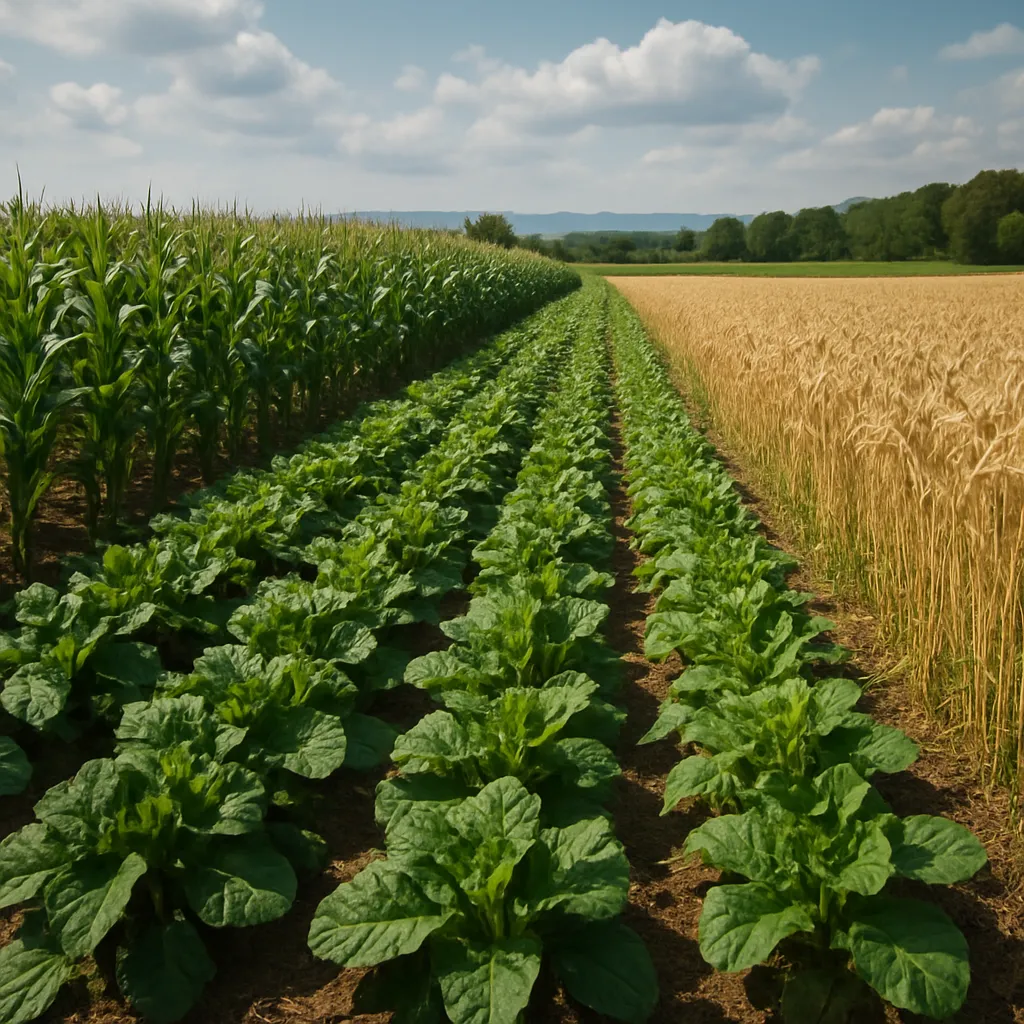
Intercropping two or more crops in the same field simultaneously maximizes spatial diversity. For instance, planting maize alongside climbing beans allows the beans to use maize stalks for support while fixing nitrogen. Alternatively, strip cropping dedicates alternating bands to different crops, reducing disease spread and wind erosion.
These spatial arrangements often enhance light interception and exploit complementary water usage patterns, leading to overall yield improvements. Moreover, such innovation in field design can position farms at the forefront of agroecological research and diversify farm income through value-added marketing.
Integrating Agroecological Principles in Your Farm
Enhancing Ecosystem Services
Diversification dovetails with agroecological approaches by mimicking natural ecosystems. By promoting beneficial insects and soil organisms, diversified fields require fewer chemical inputs. Farmers can establish flowering margins or hedgerows to attract predators of crop pests, reinforcing on-farm ecosystem balance.
Key practices include:
- Planting pollinator strips with native wildflowers.
- Maintaining hedgerows and perennial buffers.
- Minimizing tillage to preserve soil structure and mycorrhizal networks.
These measures improve biological control and foster a self-regulating farm environment, strengthening overall resilience to climatic shocks.
Precision Agriculture Meets Diversity
Modern tools such as GPS mapping, variable-rate technology, and remote sensing enable precise management of diversified fields. Soil sensors can detect nutrient hotspots, guiding selective application of amendments. Drone imagery reveals micro-patterns in pest infestations, allowing targeted interventions instead of blanket treatments.
By marrying high-tech approaches with crop diversification, farmers achieve optimum adaptation to site-specific conditions, cutting input costs and environmental footprints. Digital decision-support systems further refine planting schedules and crop choices based on real-time weather forecasts and market trends.
Measuring Success and Continuous Improvement
Quantifying the benefits of diversification is essential for long-term adoption. Key performance indicators may include:
- Yield per hectare across rotation cycles
- Changes in soil organic matter
- Reduction in external input usage
- Incidence of pest and disease outbreaks
- Economic return per unit of land
Regular monitoring and record-keeping enable farmers to adjust cropping schemes, refine cover crop mixtures, and optimize intercropping patterns. This iterative process underpins continuous learning and elevates overall farm innovation.
Conclusion of Strategies for Sustainable Diversification
Embracing crop diversification transforms conventional fields into dynamic, ecosystem-driven production units. By integrating rotations, cover crops, intercropping, and precision tools, farmers can achieve multiple objectives: enhanced productivity, environmental stewardship, and financial stability. Ultimately, diversified systems foster healthy soils, balanced agroecosystems, and robust farm incomes in the face of evolving global challenges.