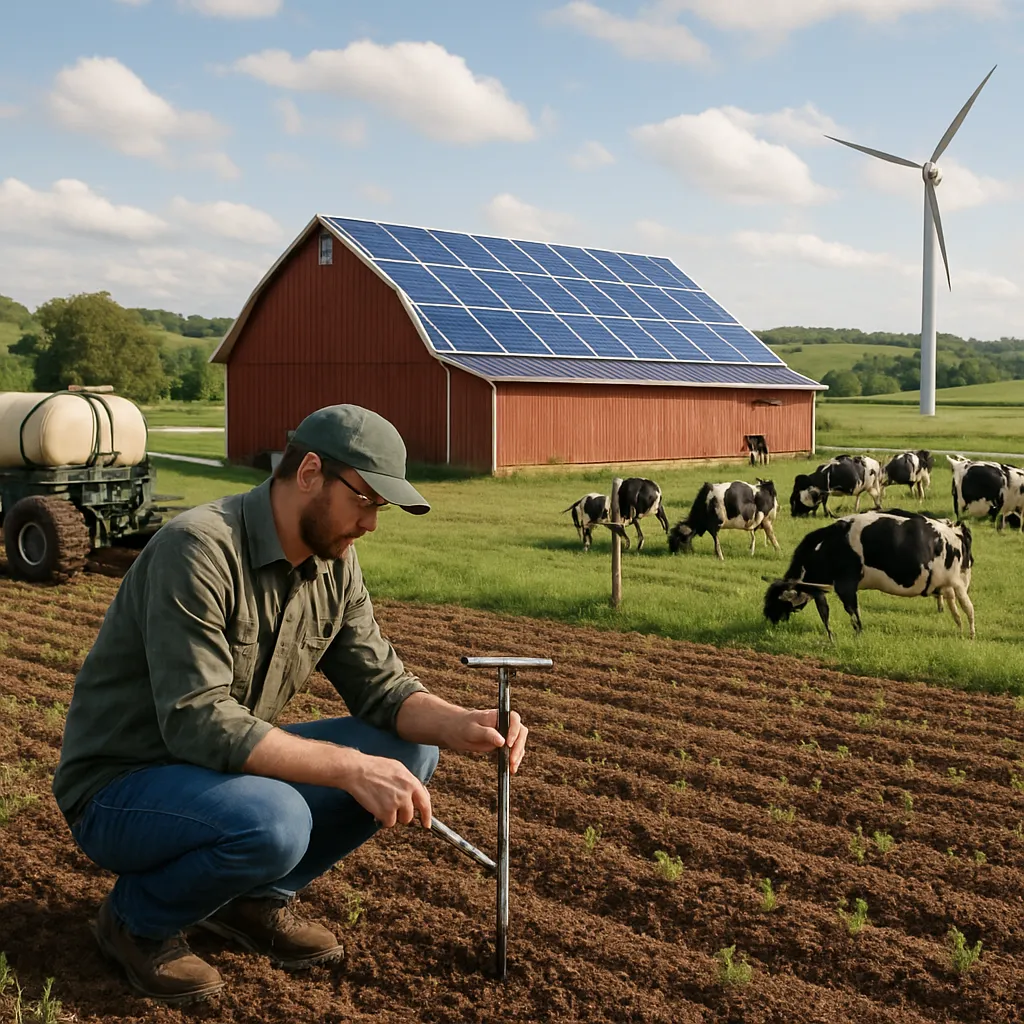
Effective farm management goes beyond daily tasks; it embraces strategic practices that minimize environmental impact while enhancing overall performance. By implementing targeted approaches across soil, livestock, and resource use, farmers can significantly lower their emissions footprint. Adopting cutting-edge tools and well-structured systems fosters sustainability and boosts long-term resilience in an ever-evolving agricultural landscape.
Understanding Farm Emissions and Their Impact
The Sources of Greenhouse Gases
Farm operations generate several types of greenhouse gases, primarily carbon dioxide (CO₂), methane (CH₄), and nitrous oxide (N₂O). CO₂ often results from fuel combustion in machinery and transport. CH₄ is released from enteric fermentation in ruminant animals and during manure storage, while N₂O emerges through fertilizer application and soil microbial activity. Each gas exhibits a distinct Global Warming Potential (GWP), with methane roughly 25 times and nitrous oxide around 298 times more impactful than CO₂ over a century. Recognizing these sources is the first step toward targeted mitigation.
Assessing On-Farm Emissions
Quantifying greenhouse gases on a farm requires diligent recordkeeping and analysis. Farmers can use emission calculators or software platforms that integrate with existing management systems. Key data inputs include fuel usage, fertilizer rates, livestock numbers, and yield statistics. By establishing an emissions baseline, managers can measure progress, identify hotspots, and allocate resources strategically. Emission assessments also support compliance with evolving regulations and participation in carbon markets, unlocking potential revenue streams.
Strategies to Reduce Emissions Through Better Management
Soil and Crop Management for Carbon Sequestration
Healthy soils not only underpin high yields but also act as vital carbon sinks. Practices that promote soil organic matter accumulation contribute to carbon drawdown and improved soil structure. Consider the following:
- Implementing cover cropping to reduce erosion, enhance nutrient cycling, and increase biomass input.
- Adopting no-till or reduced-till approaches to minimize soil disturbance, preserve microbial networks, and prevent CO₂ release.
- Rotating diverse crop species, including legumes, to naturally fix nitrogen, reduce synthetic fertilizer reliance, and enhance biodiversity.
- Applying organic amendments (compost, biochar) to boost soil fertility and long-term carbon retention.
Precision Agriculture and Resource Efficiency
Precision agriculture harnesses GPS, sensors, and data analytics to align inputs precisely with crop needs. This approach promotes:
- Efficient fertilizer use through variable-rate application maps, reducing N₂O emissions and nutrient runoff.
- Optimized irrigation scheduling via soil moisture probes and weather forecasting, conserving water and limiting energy consumption.
- Timely field operations guided by real-time crop health monitoring, minimizing fuel usage and machinery wear.
Livestock and Manure Management
Animal agriculture presents unique challenges and opportunities for emission reductions. Enhancing feed quality, manure handling, and housing conditions can curb methane and nitrous oxide outputs:
- Incorporating feed additives (e.g., fats, oils, nitrates) shown to suppress enteric methane formation.
- Implementing anaerobic digesters to convert manure into biogas, capturing CH₄ for on-farm energy use and generating nutrient-rich digestate as fertilizer.
- Storing manure in covered lagoons or sealed tanks to limit gas escape, and timing land applications to seasons when crops can best utilize nutrients.
- Designing rotational grazing systems that evenly distribute livestock across pastures, enhancing soil carbon storage and minimizing compaction.
Energy and Infrastructure Optimization
Transitioning to renewable energy and efficient infrastructure can dramatically cut on-farm fossil fuel demands. Consider these steps:
- Installing solar panels or small-scale wind turbines to power irrigation pumps, refrigeration units, and electric fences.
- Using high-efficiency LED lighting, variable-speed drives on motors, and insulated storage facilities to lower electricity and heating costs.
- Investing in electric or biofuel-compatible tractors and machinery to reduce diesel dependency.
Monitoring, Technology, and Continuous Improvement
Data-Driven Decision Making
Effective emission reduction relies on consistent monitoring and iterative refinement. Establish Key Performance Indicators (KPIs) such as fuel usage per hectare, methane yield per head of livestock, or percentage of field under cover crops. Leverage farm management software to aggregate data from multiple sources—weather stations, soil sensors, and machinery telematics. Regular reviews, ideally aligned with crop rotations or seasonal milestones, enable swift course corrections and reinforce accountability.
Embracing Innovation and Collaboration
Staying ahead in farm management involves actively seeking new technologies and best practices. Engage with:
- Local extension services and industry groups to access the latest research on emission mitigation and innovation pilots.
- Peer networks and farmer cooperatives for knowledge sharing, bulk procurement of sustainable inputs, and joint investment in renewable infrastructure.
- Agri-tech startups developing AI-driven advisory tools, robotics for precise weeding and spraying, or blockchain platforms for transparent carbon credit tracking.
Continuous Training and Workforce Engagement
The most advanced technologies can underperform without well-trained staff. Investing in ongoing education helps cultivate a culture of environmental stewardship and operational resilience. Key actions include:
- Organizing hands-on workshops on new equipment, software, and emission-friendly practices.
- Encouraging team-based problem solving, where employees propose and trial novel management tweaks.
- Recognizing and rewarding field-level improvements, from reduced fuel consumption to enhanced productivity gains.
Benchmarking and Compliance
Benchmarking performance against regional or international standards offers perspective on progress. Metrics such as greenhouse gas intensity per unit of output help demonstrate leadership in conservation and unlock access to premium markets. Additionally, understanding regulatory frameworks—emission caps, reporting protocols, or carbon offset schemes—ensures full compliance and financial incentives eligibility. This alignment fosters robust farm operations capable of thriving under both environmental scrutiny and market demands.