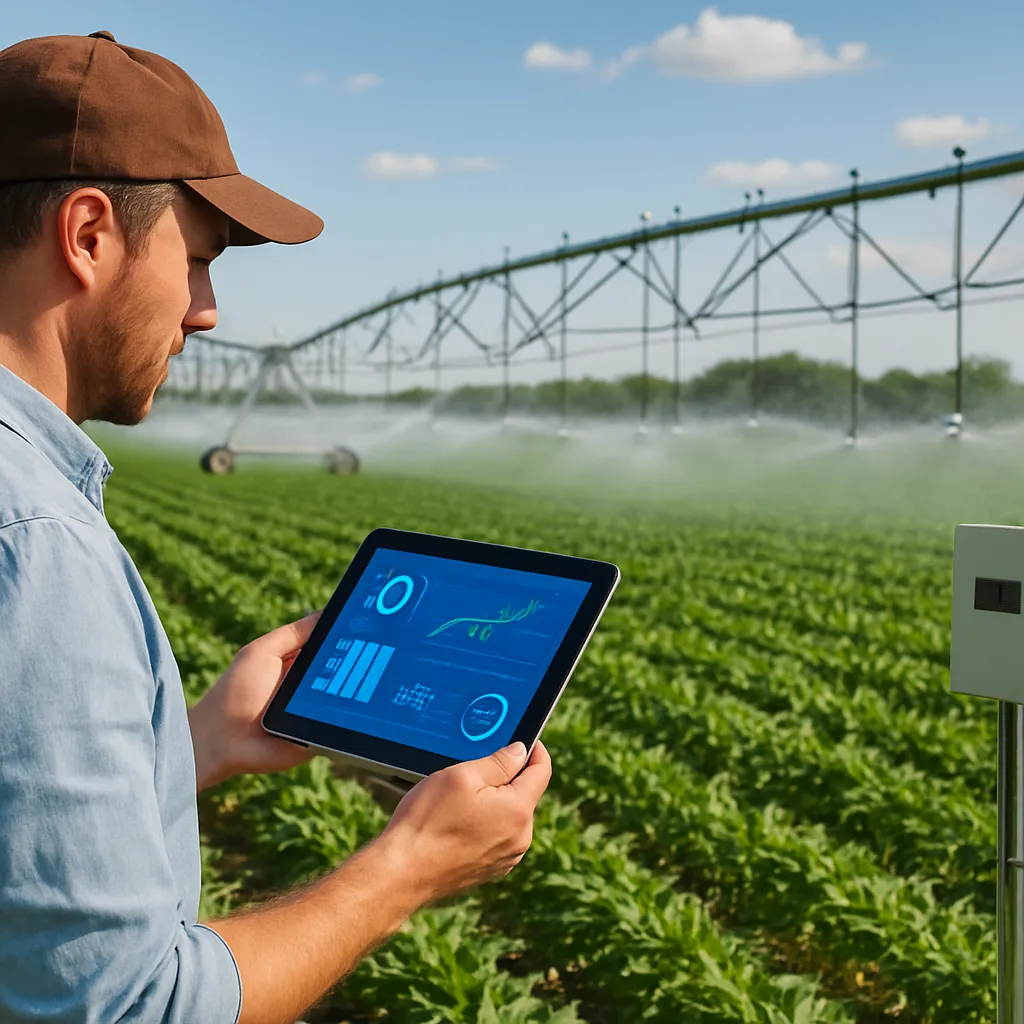
Adoption of smart irrigation systems revolutionizes modern farming by integrating advanced technology with time-honored cultivation methods. Growers harness data-driven insights to optimize water delivery, reduce waste, and improve overall crop performance. By leveraging real-time monitoring and intelligent controls, farms can adapt quickly to changing environmental conditions, conserving resources while achieving higher yields. This approach not only addresses the challenge of diminishing freshwater supplies but also paves the way for more resilient and sustainable agricultural practices.
Implementing Smart Irrigation Technologies
To introduce a reliable smart irrigation setup, begin with an assessment of field conditions and water sources. Install soil moisture sensors at various depths to capture accurate data on root-zone hydration. Pair these with weather stations or connect to online forecasts for dynamic adjustments. Utilize drip or micro-spray emitters for targeted delivery that minimizes runoff and evaporation losses. Proper system calibration is essential—ensure each valve and nozzle delivers consistent flow rates according to design specifications.
- Map your irrigation zones based on soil texture and topography.
- Choose controllers that support wireless connectivity for remote management.
- Schedule periodic maintenance checks to clean filters and flush lines.
- Implement leak-detection alarms to identify malfunctions promptly.
Automation of start/stop cycles reduces human error and enhances operational efficiency. Modern controllers can interpret sensor readings, adjusting irrigation durations or pausing cycles during rainfall events. This level of automation ensures water is applied only when crops truly need it, avoiding both under- and over-irrigation. The ability to monitor and modify settings via smartphone apps or web dashboards further simplifies farm management and increases responsiveness.
Optimizing Water Management Practices
Effective water management extends beyond the irrigation system itself—it requires a holistic strategy encompassing soil characteristics, crop water requirements, and climatic factors. Regular soil testing reveals nutrient levels, pH, and organic matter content, guiding the selection of suitable amendments to enhance water retention. Incorporate soil conditioners such as compost or biochar to improve structure and reduce percolation losses. Adjust irrigation schedules based on crop growth stages, since young plants often demand different water regimes than mature stands.
Monitoring local weather patterns and engaging in weather forecasting services helps anticipate heat waves or dry spells. Integrate data on evapotranspiration rates to calculate crop water use precisely. Allocate water budgets per field by combining sensor data with climatic indices. Employ deficit irrigation techniques—delivering slightly less water during non-critical phases—to encourage root development and increase drought resilience without significantly affecting yield.
- Use cover crops to protect soil surface and minimize evaporation.
- Alternate furrow irrigation with drip systems to balance efficiency and cost.
- Record irrigation events and volume applied for continuous improvement.
- Engage in on-farm trials to tailor practices to local microclimates.
Enhancing Crop Productivity and Sustainability
Smart irrigation contributes to higher yield potentials by maintaining ideal moisture levels that sustain critical physiological processes. Uniform water distribution prevents stress spots that stunt growth or trigger disease outbreaks. When combined with precision agriculture tools—such as variable-rate application machinery and drone imagery—farmers gain a comprehensive view of field variability, enabling site-specific treatments for nutrition and pest control.
Integrate sustainable soil management practices like crop rotation to break pest and disease cycles, while preserving soil health. Rotate deep-rooted and shallow-rooted species to optimize water uptake and nutrient cycling. Apply organic mulches to suppress weeds and conserve soil moisture. These practices foster a resilient system where irrigation inputs amplify natural fertility rather than substitute for it.
- Practice intercropping to shade soil and reduce evaporation.
- Adopt integrated pest management to reduce chemical inputs.
- Monitor plant health with multispectral sensors or satellite imagery.
- Encourage biodiversity to support beneficial insects and microorganisms.
With a commitment to resource stewardship, farms can achieve long-term economic gains. Reduced water and energy costs improve profitability, while certification under eco-label programs can open premium markets. Demonstrating responsible sustainability practices also enhances community relations and secures support from stakeholders and regulators.
Combining Smart Irrigation with Emerging Innovations
Emerging technologies amplify the impact of smart irrigation. Internet of Things (IoT) networks link thousands of devices across large farms, enabling centralized data aggregation and machine learning–driven insights. Advanced analytics predict irrigation needs days in advance, accounting for sensor readings, weather forecasts, and crop growth models. This monitoring ecosystem enhances decision-making and identifies opportunities for further water savings.
Developments in renewable energy support off-grid deployments of pumping stations and control units. Solar-powered pumps provide a reliable alternative to diesel generators, lowering carbon footprints and operating expenses. Integrating telemetry with solar tracking systems maximizes energy capture throughout the day, sustaining remote sensor arrays and actuators without interruption.
- Explore soil–plant–atmosphere continuum models for predictive irrigation.
- Test biodegradable soil probes to minimize environmental impact.
- Implement blockchain-based water accounting for transparent reporting.
- Partner with research institutions to pilot novel moisture-sensing materials.
By staying at the forefront of innovation, growers ensure that their irrigation networks evolve alongside technological advances. Emphasizing calibration and regular data audits boosts reliability, while fostering an attitude of continuous learning helps teams adapt to new tools and methodologies. Ultimately, this integrated approach secures water resources for future generations and reinforces the agricultural sector’s role as a steward of the environment.