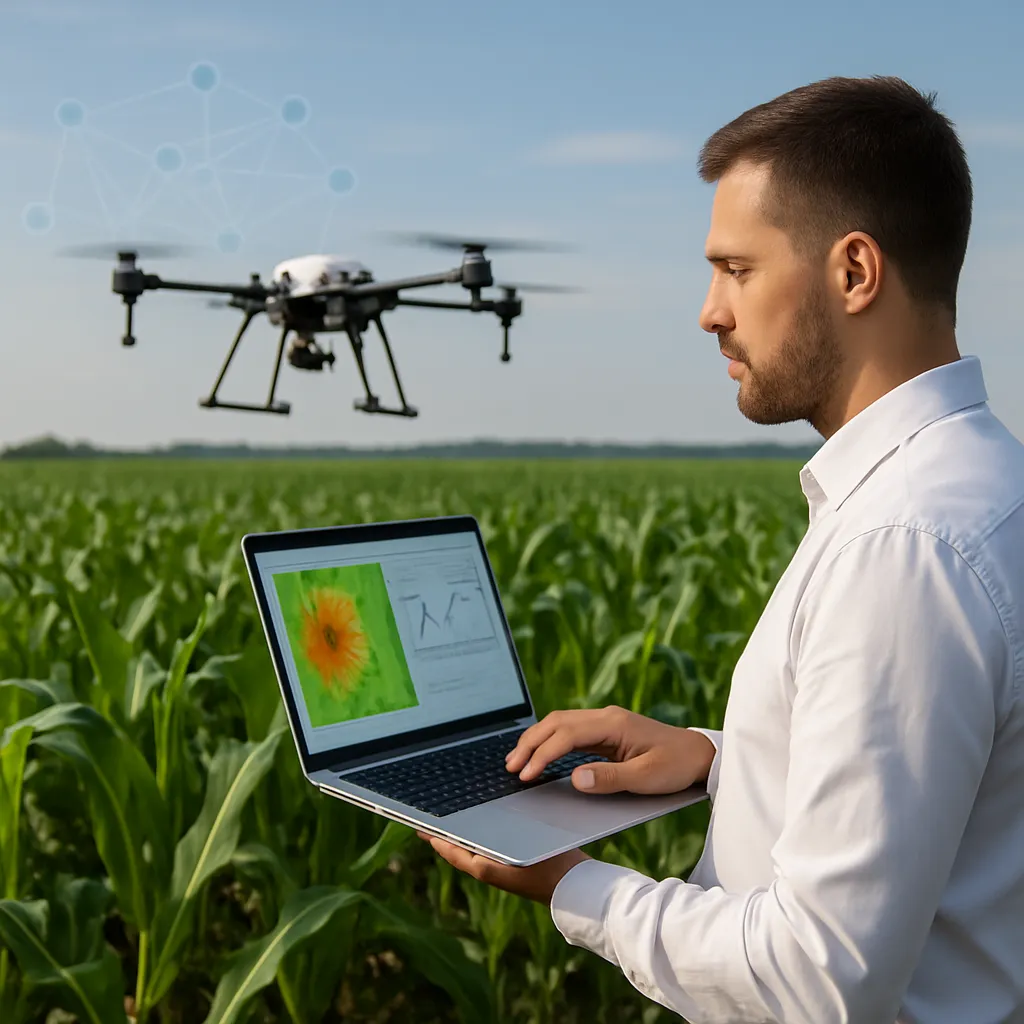
Advancements in technology are reshaping how farmers manage their fields and improve crop performance. The integration of machine learning into modern agriculture offers unprecedented capabilities for prediction of yield, resource allocation, and risk mitigation. By leveraging vast amounts of data from soil probes, weather stations, and satellite imagery, growers can make informed decisions that enhance productivity and sustainability. This article explores how these innovations function, highlights essential components, and shares practical tips for farmers to harness the power of intelligent systems.
Understanding Machine Learning in Agriculture
At its core, machine learning is a subset of artificial intelligence where algorithms identify patterns in historical information to make accurate predictions. In agriculture, ML models analyze variables such as soil moisture, nutrient levels, weather data, and crop health metrics to forecast yield outcomes. Traditional farming techniques often rely on experience and intuition, but ML systems can process thousands of data points in seconds, delivering insights that would be impossible to derive manually.
The typical workflow begins with data acquisition. Farmers install various sensors across fields, including soil probes, weather stations, drones equipped with multispectral cameras, and IoT-enabled machinery. These devices continuously transmit measurements such as soil temperature, pH, humidity, and plant vigor. The aggregated data forms a rich foundation for creating predictive models.
Once collected, the information enters a preprocessing stage. Algorithms clean the data, filter out anomalies, and standardize measurements so that the ML system can interpret them correctly. Feature engineering then transforms raw inputs into meaningful indicators—for instance, calculating growing degree days from temperature readings or estimating leaf area index from drone images. Finally, supervised learning techniques like random forests, support vector machines, or neural networks learn the relationships between factors and final yield figures from past seasons.
The result is a predictive engine that can forecast output for different crops under various conditions. Rather than relying solely on calendar-based schedules or fixed application rates, growers receive dynamic recommendations tailored to the unique characteristics of each field. This approach improves resource utilization, reduces waste, and bolsters resilience against environmental stresses.
Key Components of Crop Yield Prediction
Data Collection and Sensors
- Soil Probes: Measure moisture content, nutrient levels, and temperature to track soil health over time.
- Weather Stations: Provide real-time readings of rainfall, wind speed, solar radiation, and atmospheric pressure.
- Remote Sensing: Satellites and drones capture multispectral or hyperspectral images to assess plant vigor and stress indicators.
- IoT Devices: Tractors, irrigation systems, and fertilizer spreaders equipped with connectivity modules deliver usage metrics and operational efficiency data.
Data Processing and Feature Engineering
- Data Cleaning: Removal of outliers, filling missing values, and harmonizing units ensure data integrity.
- Normalization: Scaling inputs so that features with different ranges do not skew algorithm training.
- Derived Indicators: Calculating metrics like evapotranspiration, canopy cover, and nutrient uptake rates from raw measurements.
- Temporal Analysis: Incorporating time-series methods to capture seasonal patterns, growth stages, and stress events.
Model Training and Optimization
- Algorithm Selection: Choosing among regression trees, ensemble methods, deep neural networks, or hybrid solutions based on accuracy and interpretability requirements.
- Cross-Validation: Partitioning data into training and validation sets to prevent overfitting and ensure robust performance on unseen data.
- Hyperparameter Tuning: Adjusting parameters such as learning rates, tree depths, or regularization factors to enhance predictive power.
- Continuous Learning: Updating the model with new harvest outcomes and environmental observations to maintain relevancy.
Strategies and Practical Tips for Farmers
Implementing ML-driven approaches may appear daunting, but following these guidelines can facilitate a smooth transition:
- Start Small: Deploy a pilot program on a single field or crop. Gather baseline data to compare traditional results versus ML-guided management.
- Invest in Quality Sensors: Reliable measurements form the backbone of accurate prediction. Waterproof, calibrated, and well-maintained devices reduce noise in the dataset.
- Partner with Experts: Collaborate with agronomists, data scientists, and technology providers to design experiments, interpret results, and refine protocols.
- Integrate with Existing Workflows: Ensure that ML insights feed into daily operations—scheduling irrigation, adjusting fertilizer rates, and planning harvest windows.
- Train Your Team: Provide hands-on training for field staff to understand sensor placement, data collection procedures, and how to act on ML recommendations.
- Monitor Continuously: Set up automated dashboards to track key performance indicators such as water usage efficiency, crop health scores, and actual versus predicted yield.
- Emphasize sustainability: Use predictive alerts to apply inputs only when necessary, minimizing leaching, runoff, and ecological impact.
- Embrace Flexibility: Be prepared to adjust plans based on model outputs—for example, re-seeding areas that show early signs of underperformance.
- Leverage Decision Support: Combine ML forecasts with economic analysis to weigh the costs and benefits of interventions like supplemental irrigation or targeted pest control.
- Document and Share Insights: Compile case studies and best practices to foster a culture of continuous improvement across operations.
Challenges and Future Prospects
Despite its promise, the adoption of machine learning in agriculture faces several obstacles. Data privacy concerns arise when proprietary farm information is stored on cloud platforms. Connectivity issues in remote areas limit real-time sensor uploads. Smallholder farmers may find the initial investment in sensors and analytics tools prohibitive without financial support or co-op structures. Additionally, models trained on data from specific regions may not generalize well to different soil types, climates, or cropping systems.
Research efforts are underway to overcome these barriers. Federated learning techniques enable collaborative model development without sharing raw data, preserving privacy. Low-power wide-area networks (LPWAN) extend connectivity to distant plots. AI-driven calibration tools can automatically adjust sensor readings for local conditions, boosting reliability. Moreover, open-source platforms and government subsidies are making advanced analytics more accessible to growers of all scales.
Looking ahead, the convergence of robotics, edge computing, and 5G connectivity will further enhance real-time decision-making at the micro-scale. Autonomous vehicles equipped with ML algorithms will perform precise interventions—spot spraying weeds, optimizing planting depth, and adjusting nutrient deliveries on-the-fly. Virtual and augmented reality applications could assist agronomists in visualizing complex data overlays while walking fields.
As the world grapples with climate variability and growing food demand, the role of intelligent systems in agriculture will only intensify. By harnessing the power of predictive analytics, farmers can boost productivity, conserve resources, and build resilient supply chains, ensuring food security for generations to come.


