Maintaining a robust and productive farm often hinges on the principles of crop diversification. By incorporating a variety of plant species, farmers can foster a more resilient system that weathers environmental stresses, improves soil health, and boosts overall productivity. This approach reduces reliance on a single commodity, mitigating risks associated with pest outbreaks, market fluctuations, and unpredictable weather events. In this article, we explore the critical role of diversity, practical methods for integrating multiple crops, and actionable tips to optimize your agricultural practices.
Benefits of Crop Diversity for Resilience
Enhancing Soil Health
Introducing different crop species encourages a richer microbial community in the soil. Legumes, for instance, fix atmospheric nitrogen, reducing the need for synthetic fertilizers. Deep-rooted plants like chicory or alfalfa can improve soil structure by breaking up compacted layers, facilitating water infiltration, and promoting aeration. As roots decompose, they add organic matter, delivering vital nutrients to subsequent plantings and supporting earthworms and beneficial fungi.
Reducing Pest and Disease Pressure
Monocultures often create a haven for specialized pests and pathogens. By rotating or planting multiple crops, farmers disrupt pest life cycles and reduce disease buildup. Diverse cropping systems can:
- Act as a physical barrier, slowing pest movement across fields.
- Attract predatory insects through varied flowering periods and nectar sources.
- Lower disease reservoirs by alternating non-host species.
This integrated approach minimizes reliance on chemical interventions and fosters a balanced ecosystem of beneficial organisms.
Implementing Diverse Farming Systems
Intercropping Techniques
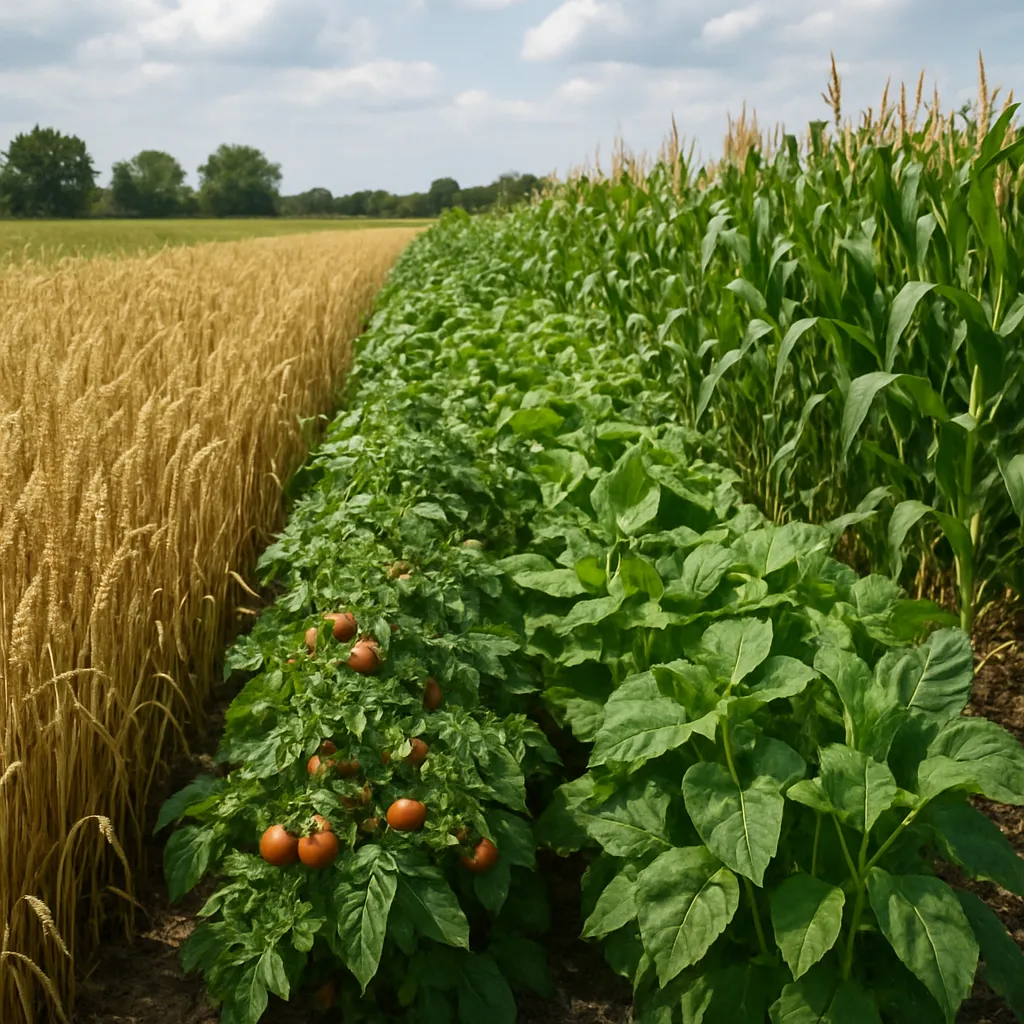
Intercropping involves growing two or more crops in proximity. This practice maximizes land use efficiency and can yield substantial benefits:
- Shade-tolerant species under taller crops reduce weed pressure.
- Complementary water and nutrient usage; deep-rooted and shallow-rooted plants optimize resource capture.
- Continuous ground cover protects against erosion.
For example, pairing maize with climbing beans allows beans to use maize stems for support while maize benefits from nitrogen enrichment. Timing and spatial arrangement are crucial to ensure neither crop outcompetes the other for light or moisture.
Crop Rotation Strategies
Well-designed rotations break pest and disease cycles, manage soil fertility, and prevent nutrient depletion. A typical cycle might follow:
- Year 1: Cereal grains (e.g., wheat or barley)
- Year 2: Legumes (e.g., peas or soybeans)
- Year 3: Root crops (e.g., carrots or potatoes)
- Year 4: Green manure cover crops (e.g., clover or rye)
This sequence enhances nitrogen retention, improves soil structure, and cuts down on fertilizer costs. Incorporate green manures during fallow periods to suppress weeds and build organic matter.
Practical Agriculture Tips for Farmers
Selecting Varieties for Resilience
Choosing the right cultivars can strengthen your farm’s ability to endure climate challenges. Consider the following criteria:
- Drought tolerance: Varieties bred for low-water conditions.
- Pest resistance: Genetics that deter common insects or pathogens.
- Local adaptation: Landraces or heirloom types suited to your region’s microclimate.
Maintaining a seed bank of diverse strains safeguards against unexpected failures and preserves genetic biodiversity for future breeding efforts.
Monitoring and Adapting to Weather Variability
Regular field scouting and data collection enable timely interventions. Track rainfall patterns, temperature extremes, and soil moisture to adjust planting dates or irrigation schedules. Use low-cost sensors or smartphone apps to record:
- Soil moisture levels at root depth.
- Daily temperature highs and lows.
- Signs of nutrient deficiencies or pest activity.
By analyzing trends, farmers can fine-tune practices to maintain optimal growing conditions and protect crop yield.
Overcoming Challenges and Future Outlook
Economic and Logistical Considerations
Diversification may require new equipment, market channels, and knowledge. Small-scale farmers can start with low-risk pilot plots before scaling up. Cooperative purchasing of seeds and shared processing facilities can lower costs. Seek grants or technical support programs that promote sustainable farming innovations.
Community Collaboration and Knowledge Sharing
Peer networks and local agricultural extension services are invaluable for exchanging tips and troubleshooting issues. Host field days to demonstrate successful models of mixed cropping, and document findings in community bulletins or online forums. Collaborative research with universities can yield data-driven insights into best practices.
Embracing Innovation for the Next Generation
Advances in precision agriculture, data analytics, and breeding technologies continue to enhance the viability of diverse farming systems. Integrating drones for crop monitoring, adopting biofertilizers, and exploring novel cover crops are just a few pathways forward. By embracing a holistic, diversity-centered approach, farmers can build farms that thrive under changing conditions and secure food production for years to come.