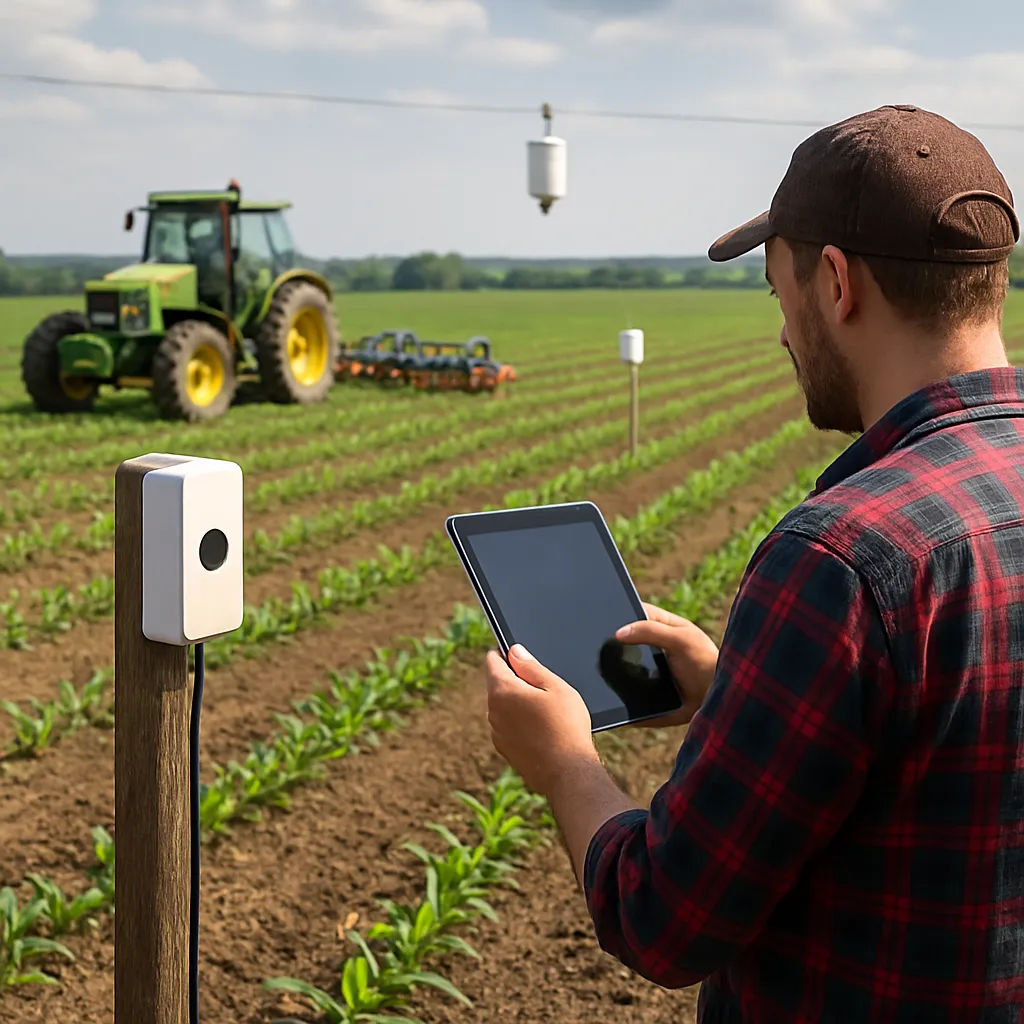
The integration of advanced technologies is transforming modern agriculture. By leveraging smart sensors within existing farm systems, growers can unlock new levels of efficiency and precision in crop management. This guide explores practical approaches to selecting, deploying, and maintaining sensor networks that boost yields, conserve resources, and future-proof operations against shifting environmental challenges.
Choosing the Right Smart Sensors
Selecting the ideal devices is the cornerstone of any successful sensor-based deployment. Consider these factors when evaluating sensor options:
Environment and Crop Compatibility
- Identify specific parameters to monitor (soil moisture, temperature, humidity, pH, nutrient levels).
- Ensure sensors are ruggedized for farm conditions: dust, water exposure, UV radiation.
- Verify compatibility with the types of crops and soil profiles on your land.
Connectivity and Power Requirements
- IoT protocols: Choose between LoRaWAN, cellular, Wi-Fi or mesh networks based on range and bandwidth.
- Solar panels or battery power: Opt for energy-efficient sensors to minimize maintenance.
- Ensure reliable connectivity even in remote fields by testing network coverage.
Accuracy, Calibration, and Certification
- Review manufacturer specifications for measurement accuracy and drift over time.
- Look for certifications that guarantee sensor precision under agricultural standards.
- Plan routine calibration schedules to maintain data integrity.
Integration Strategies for Existing Farm Infrastructure
Integrating new sensors into pre-existing systems requires careful planning to avoid disruptions and redundant investments. Follow these proven methods:
Modular Integration Approach
- Begin with pilot zones to validate performance and data workflows.
- Scale deployment in phases: start small, then expand to cover the full acreage.
- Leverage plug-and-play sensor modules that connect to standard headers and junction boxes.
Wiring, Mounting, and Placement
- Use weatherproof conduit and UV-resistant cables for reliable connectivity.
- Mount nodes at key locations: irrigation pivots, greenhouses, and high-traffic areas.
- Place soil sensors at root zone depth to capture meaningful moisture data.
Interfacing with Existing Control Systems
- Integrate with irrigation controllers, greenhouse management platforms, and climate stations.
- Utilize open standards (MQTT, Modbus, REST APIs) for seamless data exchange.
- Work with vendors to develop custom drivers or middleware for legacy hardware.
Data Collection, Analysis, and Actionable Insights
Collecting raw data is only the first step. Turning sensor readings into decisions requires robust analytics and automated workflows.
Real-Time Monitoring Platforms
- Deploy dashboards that display real-time moisture, temperature, and nutrient curves.
- Set up customizable alerts for threshold breaches (e.g., drought stress, frost risk).
- Enable mobile access so farm managers can track field conditions on the go.
Advanced Analytics and Machine Learning
- Use predictive models to forecast irrigation needs and pest outbreaks.
- Implement automation rules for variable-rate irrigation and fertilization.
- Continuously refine algorithms using historical data for better optimization.
Integration with Farm Management Systems
- Feed sensor outputs directly into crop planning and inventory modules.
- Track operational costs, labor, and yield performance in unified software.
- Employ decision-support tools for dynamic scheduling of field tasks.
Maintenance, Scalability, and Future-Proofing
Long-term success demands ongoing upkeep and an eye toward emerging innovations.
Routine Maintenance and Troubleshooting
- Establish regular inspections for sensor health, cable integrity, and signal strength.
- Replace worn parts promptly to avoid data gaps.
- Train staff on simple diagnostic procedures and firmware updates.
Scaling Up with Confidence
- Design network topologies that support incremental additions without major rewiring.
- Budget for extra gateways or repeaters to cover new fields.
- Adopt a modular procurement strategy to leverage volume discounts.
Preparing for Future Technologies
- Monitor advances in sensor miniaturization, bio-sensors, and satellite integrations.
- Evaluate blockchain or edge-computing frameworks to enhance data security and scalability.
- Remain open to interoperable platforms that encourage third-party innovation.
By carefully selecting sensors, planning integration with existing equipment, harnessing robust analytics, and committing to maintenance, farmers can harness the full potential of sustainable precision agriculture. The journey begins with small pilots and grows into a fully connected operation that maximizes yields, reduces waste, and adapts to future challenges.


