Small-scale farming demands a blend of practical knowledge, resourcefulness, and a commitment to continuous improvement. By focusing on key areas such as soil health, crop diversification, water management, pest control, and modern technologies, growers can boost productivity while maintaining environmental harmony. This article offers actionable suggestions and insights that empower farmers to achieve **sustainability** and increased **efficiency** in their operations.
Enhancing Soil Health and Fertility
Productive agriculture starts with healthy ground. Maintaining robust **soil** structure and appropriate nutrient levels is crucial for ensuring consistent **yield** and long-term viability.
Soil Testing and Amendments
- Conduct regular soil analyses to measure pH, nutrient content, and organic matter.
- Apply lime or sulfur to adjust soil acidity, aiming for a pH range of 6.0–7.0 in most vegetable and cereal crops.
- Incorporate mineral fertilizers based on test results, focusing on balanced ratios of nitrogen (N), phosphorus (P), and potassium (K).
- Monitor micronutrients such as zinc, iron, and manganese, which often limit growth when deficient.
Composting and Organic Matter
- Develop on-farm composting systems using crop residues, manure, and green waste to build soil **fertility** organically.
- Ensure proper carbon-to-nitrogen ratio (approximately 30:1) in piles to accelerate decomposition and minimize odors.
- Apply finished compost at 2–5 tons per hectare annually to improve water retention and microbial activity.
- Explore vermicomposting with earthworms for high-quality, nutrient-rich castings.
Smart Crop Planning and Diversification
Relying on a single produce can expose farmers to market fluctuations and pest outbreaks. Strategic planning and diversification bolster resilience.
Choosing the Right Crop Varieties
- Select cultivars adapted to local climate and soil conditions, focusing on disease-resistant or early-maturing types.
- Opt for high-value specialty crops (herbs, berries, niche vegetables) that command better market prices.
- Trial small test plots before large-scale planting to gauge performance under your specific environmental conditions.
Rotation and Intercropping
- Implement crop rotation schemes to break pest and **disease** cycles; alternate legumes, cereals, and root crops across seasons.
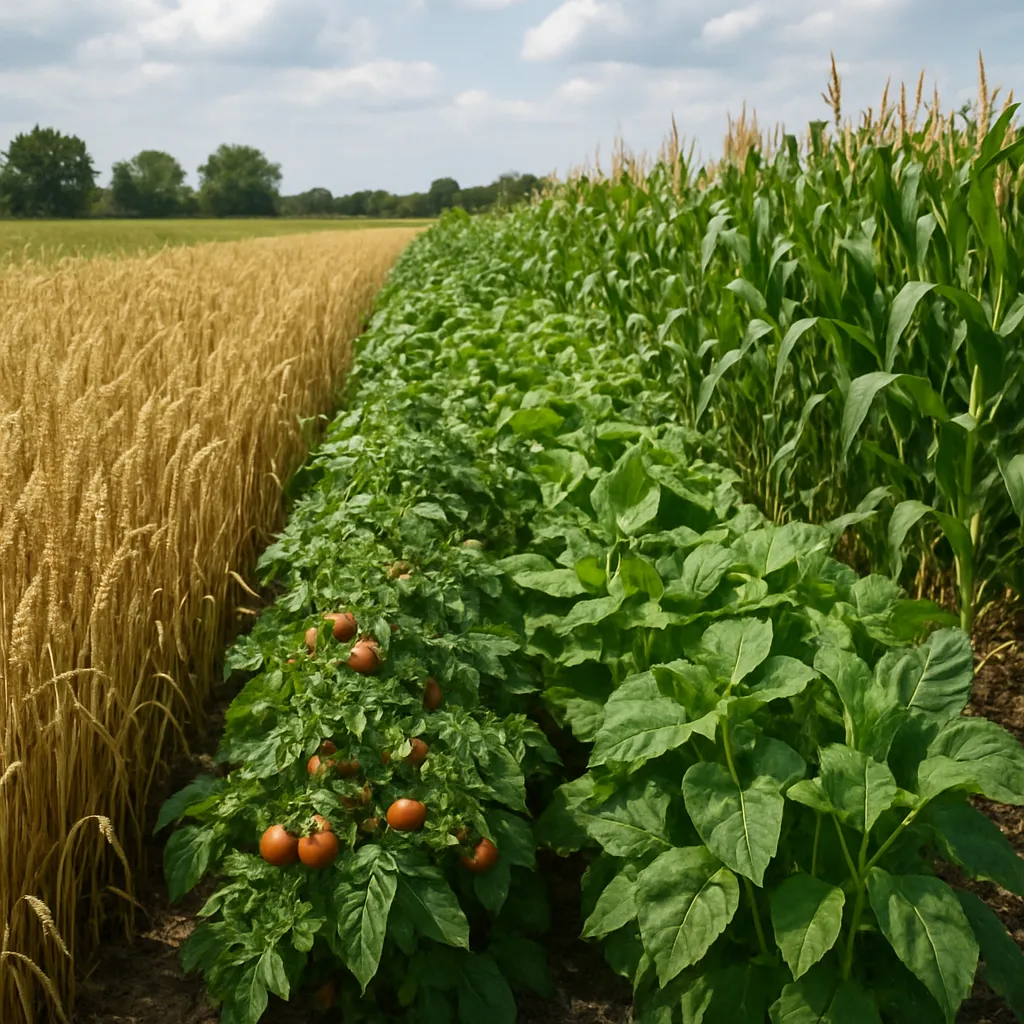
- Use intercropping to maximize land use: pair tall plants (like maize) with low-growing legumes (beans) to enhance **soil** nitrogen.
- Incorporate cover crops (clover, rye, vetch) during fallow periods to protect soil from erosion and fix atmospheric nitrogen.
Efficient Water Management and Irrigation Strategies
Water is a precious resource. Thoughtful irrigation planning leads to **sustainability** and enhanced productivity, especially in water-stressed regions.
Drip and Sprinkler Systems
- Install drip irrigation to deliver water directly to the root zone, reducing evaporation losses by up to 60% compared to flood irrigation.
- Adjust droplet spacing and flow rates based on crop type, soil texture, and growth stage.
- Use low-pressure sprinklers for seedlings and delicate crops; switch to micro-sprayers during warmer months to cool foliage.
Rainwater Harvesting
- Collect rainwater from roofs and hard surfaces using gutters and storage tanks to supplement irrigation during dry spells.
- Build small ponds or cisterns to store runoff; line reservoirs to prevent seepage if soil is highly permeable.
- Incorporate simple sand or gravel filters to remove debris and reduce clogging in drip lines and emitters.
Integrated Pest and Disease Management
Balancing proactive measures with targeted interventions helps preserve beneficial organisms and minimize chemical inputs.
Biological Controls
- Encourage predatory insects (ladybugs, lacewings) by planting nectar-rich flowering strips along field margins.
- Introduce beneficial nematodes or Bacillus thuringiensis (Bt) products to control soil-dwelling pests and caterpillars.
- Utilize pheromone traps and sticky cards for monitoring and reducing populations of fruit flies and moths.
Preventive Measures
- Sanitize tools and equipment between fields to avoid cross-contamination of **pest** eggs or fungal spores.
- Practice crop rotation and remove plant debris promptly to eliminate overwintering sites for pathogens.
- Deploy resistant varieties where possible and apply targeted organic or low-toxicity sprays only when economic thresholds are reached.
Leveraging Technology and Innovation
Modern advancements can be scaled to suit small holdings, boosting decision-making and labor **efficiency**.
Mobile Apps and Data Analytics
- Use smartphone platforms for real-time weather forecasts, pest alerts, and market price updates.
- Adopt simple data-logging tools to record planting dates, input costs, and yields, enabling year-on-year comparison.
- Analyze field patterns through free satellite imagery services, identifying stress zones for targeted interventions.
Mechanization and Tools
- Invest in lightweight, multi-purpose implements—such as two-wheel tractors and seed drills—to reduce manual labor.
- Consider solar-powered water pumps or battery-operated sprayers for energy-efficient field operations.
- Maintain equipment regularly, sharpening blades and greasing moving parts to extend lifespan and maintain performance.