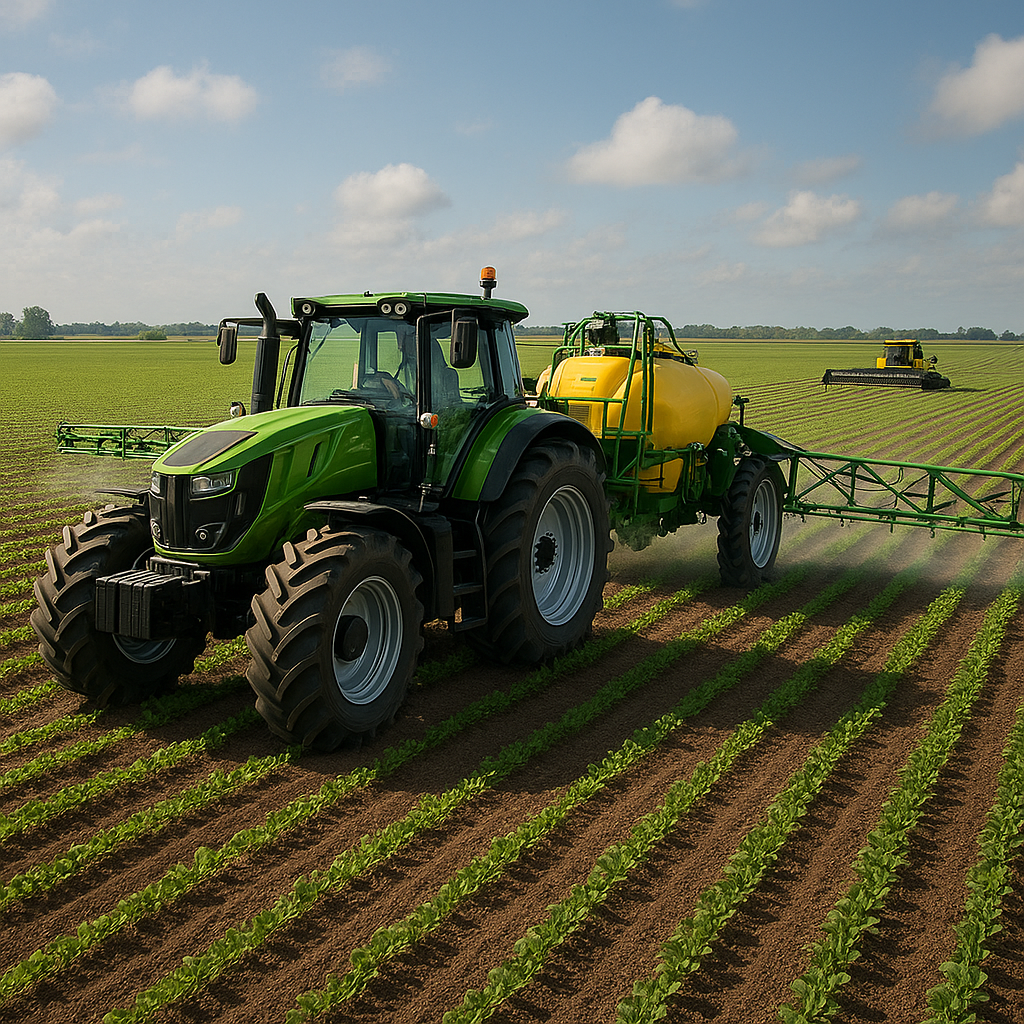
The global agriculture sector is undergoing a profound transformation as farms adopt smarter, cleaner and more efficient machinery. From precision planters and autonomous tractors to electric harvesters and connected implements, today’s equipment is reshaping how food is produced, managed and marketed. Platforms such as agriculturalmachinery.top illustrate how diverse and fast‑evolving this market has become, offering solutions for farms of every size. At the same time, rising input costs, climate pressure and labor shortages are forcing growers to seek machines that maximize productivity while reducing environmental impact. Understanding the latest trends in modern agricultural machinery is now essential not only for large commercial producers, but also for medium and small farms that want to stay competitive in a rapidly changing landscape.
Precision and data‑driven field operations
One of the most significant trends is the shift toward **precision** agriculture, where machinery operates using detailed data about soil, crops and weather. Modern planters, sprayers and spreaders are equipped with GPS receivers, variable rate controllers and advanced sensors that allow them to place seeds, fertilizer and crop protection products only where they are needed. This targeted approach reduces waste, improves yields and helps protect the environment.
Precision seeding systems can adjust seed spacing and depth in real time based on soil characteristics and field maps. Similarly, variable rate fertilizing equipment reads prescription maps and responds to sensor input to deliver nutrients precisely. Sprayers equipped with optical recognition can detect green plants and spray only weeds, drastically reducing chemical use. These solutions depend on **telematics**, cloud software and high‑resolution mapping, turning every pass of a machine into a source of valuable information for future decisions.
Autonomous and semi‑autonomous machinery
Labor shortages and the need for 24‑hour operation are driving rapid development of autonomous and semi‑autonomous farm equipment. Tractor platforms with advanced guidance systems can already perform tasks like tillage and seeding with minimal human intervention. Cameras, radar, lidar and ultrasonic sensors work together with artificial intelligence to keep machines on track, avoid obstacles and adjust operations to changing field conditions.
In many cases, full autonomy is still combined with human supervision. An operator may monitor multiple machines from a control room or tablet, stepping in only when the system encounters an unexpected situation. Smaller autonomous units are also gaining popularity; fleets of compact robots can perform tasks such as inter‑row cultivation, spot spraying or mechanical weeding with remarkable precision. By distributing work across several autonomous units, farms increase resilience while reducing dependence on a single large tractor.
Electrification and alternative powertrains
Another key trend is the move away from purely diesel‑powered machinery toward **electric** and hybrid solutions. Improvements in battery technology and charging infrastructure make it possible to electrify more field operations, especially in horticulture, vineyards and smaller arable farms. Electric tractors generate less noise, offer instant torque and can be charged from renewable energy sources, reducing both emissions and fuel bills.
Hybrid systems, which combine internal combustion engines with electric drives, are increasingly used in large harvesters and loaders. These setups recover energy during braking or downhill operation and reuse it during heavy work, improving efficiency. Alternative fuels such as biogas, HVO and hydrogen are also being tested as options for high‑horsepower machines where full electrification remains challenging. Together, these technologies support farm decarbonization and help producers meet tightening environmental regulations.
Smart implements and ISOBUS connectivity
Modern agricultural machinery is no longer just about the tractor; implements have become intelligent machines in their own right. Seed drills, balers, sprayers and mowers are fitted with electronic control units that communicate with the tractor through standardized interfaces like ISOBUS. This connectivity allows a single terminal in the tractor cab to control many different implements, simplifying operation and reducing clutter.
Smart implements can automatically adjust working width, application rate, or cutting height based on sensor data and GPS position. For example, a baler can measure moisture and density in real time and change its settings to produce consistent bales. A mower can lift its sections when passing over already cut or sensitive areas, protecting both crops and soil. As a result, the whole machine system is more efficient and more responsive to the conditions in each part of the field.
Robotics and advanced mechanization for specialty crops
In fruit, vegetable and other high‑value crops, robotics is emerging as a transformative technology. **Robots** equipped with cameras, manipulators and machine learning algorithms are beginning to handle tasks that were traditionally manual, such as harvesting strawberries, apples or peppers. While these systems are still developing, they already show promise in addressing labor shortages and ensuring timely harvests.
Mechanical weeding robots use vision systems to distinguish crops from weeds and remove unwanted plants either by cutting or by targeted micro‑spraying. In orchards and vineyards, robotic platforms carry tools for pruning, canopy management or targeted spraying. These machines are often smaller and lighter than conventional equipment, which helps reduce soil compaction and damage to delicate crops. Over time, continuous data collection by robots will support even more refined management strategies.
Integration of AI, imaging and decision support
The combination of high‑resolution imaging and artificial intelligence is changing how farmers monitor and manage their fields. Cameras mounted on sprayers, planters and harvesters capture detailed images of crops and soil during normal operations. AI models then analyze these images to detect nutrient deficiencies, disease symptoms, weed pressure or pest damage, often before they are visible to the human eye.
These insights feed into **decision‑support** tools that recommend specific actions, such as adjusting nitrogen rates in certain zones or planning a targeted fungicide application. When integrated with farm management software, this information helps producers evaluate the economic impact of each intervention. Over time, these data streams contribute to digital field histories that make machinery smarter with every season, ultimately improving profitability and sustainability.
Soil health, conservation and reduced compaction
Sustainable agriculture has become a central priority, and machinery design increasingly focuses on preserving soil health. Low‑pressure tires, tracks and controlled traffic systems limit soil compaction, allowing roots to grow deeper and improving water infiltration. Lighter implements and optimized weight distribution further reduce pressure on the soil surface.
Machines tailored for conservation tillage and no‑till systems are gaining ground. Strip‑till units, high‑residue planters and specialized openers enable precise seed placement with minimal disturbance. Residue management tools cut and distribute crop remains evenly, protecting the soil surface from erosion. Together, these developments support regenerative practices that keep soils productive for the long term while sequestering more carbon.
Comfort, safety and human‑machine interaction
Even as machinery becomes more autonomous, the role of the operator remains critical. Manufacturers are investing heavily in cab comfort, visibility and **ergonomics** to reduce fatigue and enhance safety. Modern cabs resemble mobile offices, with air suspension seats, climate control, low‑noise interiors and high‑definition displays presenting key information in an intuitive way.
Safety features such as 360‑degree cameras, proximity sensors, automatic braking and rollover protection systems are increasingly standard. User interfaces are designed to be familiar to operators used to smartphones and tablets, with touch screens and customizable layouts. This focus on human‑machine interaction not only improves day‑to‑day work conditions but also shortens training time for new operators, an important factor in regions with limited skilled labor.
Connectivity, telematics and fleet management
Connectivity underpins many of the latest developments in agricultural machinery. Telematics systems transmit machine performance, fuel usage and location data to cloud platforms in real time. Farm managers can monitor operations from anywhere, planning logistics more effectively and responding quickly to breakdowns or delays.
Predictive maintenance is another important benefit. By analyzing operating hours, load patterns and sensor readings, software can predict when parts are likely to fail and schedule service at convenient times. This reduces downtime and extends the life of expensive assets. Fleet management tools help coordinate multiple machines across different fields, ensuring they are used efficiently and that critical operations, such as harvesting or spraying within narrow windows, are completed on time.
Modularity, scalability and solutions for smaller farms
While much attention focuses on large, high‑horsepower equipment, a parallel trend is the development of modular and scalable machinery that suits small and medium‑sized farms. Compact tractors with quick‑attach systems, lightweight planters and small sprayers allow growers to tailor their equipment fleet to changing needs. Some robotic platforms are designed specifically for small fields or high‑value crops, making advanced technology accessible beyond large industrial farms.
Modularity also simplifies maintenance and upgrades. Farmers can replace or add components such as guidance systems, sensors or controllers without purchasing entirely new machines. This flexibility is especially important in regions where capital is limited but demand for more efficient and environmentally friendly production is growing quickly.
Future outlook: toward fully integrated farm ecosystems
Looking ahead, the most profound change may be the integration of all these technologies into coherent farm ecosystems. Tractors, implements, sensors, storage facilities and even irrigation systems will increasingly communicate with each other, sharing data and executing coordinated plans. Seasonal activities, from planting to harvest, will be optimized as a continuous process rather than as isolated operations.
As standards and interoperability improve, farmers will be able to combine equipment from different manufacturers into unified digital workflows. The result will be a more resilient and responsive production system, better able to cope with climate variability, market volatility and resource constraints. By embracing **innovation** in modern agricultural machinery, producers at every scale can enhance productivity, strengthen sustainability and secure their role in the global food supply chain for years to come.